Pergola vs Veranda vs Awning: Which Is Right?
All three give you shelter outdoors, but they work in different ways. A pergola is a standalone structure, a veranda is a roofed area attached to the house, and an awning is a retractable cover that folds away. This guide compares them so you can pick the right one.
The short answer
Choose a pergola for a standalone structure you can site anywhere and furnish as an outdoor room. Choose a veranda for permanent covered space attached to the house that extends the living area. Choose an awning for shade on demand that folds away when you do not need it. A pergola offers the most as a destination in the garden; a veranda ties to the house; an awning is the most flexible but the least substantial.


Pergola vs veranda vs awning at a glance
Which suits you
Choose a pergola if
You want a standalone garden feature you can site where you like and furnish as an outdoor room, bar or kitchen.
Choose a veranda if
You want permanent covered space attached to the house that extends the living area straight off the back or side.
Choose an awning if
You want shade on demand that rolls out when the sun is strong and folds away the rest of the time.
The three explained
What a pergola is
A pergola is a framed garden structure with a roof and posts. It can be freestanding or fixed to a wall, and a solid roof gives real shelter. Because it stands as its own space, it is the natural base for an outdoor room, bar or kitchen, sited wherever the garden works best.
What a veranda is
A veranda is a roofed area built onto the house, running along an outside wall. It is a permanent extension of the living space, sheltered and often part-enclosed, but it stays attached to the house rather than sitting out in the garden.
What an awning is
An awning is a fabric cover on a retractable arm, fixed to a wall and rolled out for shade. It is the most flexible of the three, giving cover when you want it and folding away when you do not, but it offers overhead shade only rather than a full structure.
The main differences
The split is between a standalone structure, a house extension and a retractable cover. A pergola is a destination in the garden. A veranda extends the house. An awning is temporary shade you deploy and put away. Permanence, shelter and where they sit all follow from that.
How to decide
Ask what you want the space to be. A room in the garden points to a pergola. More covered living space off the house points to a veranda. Occasional shade over a patio points to an awning.
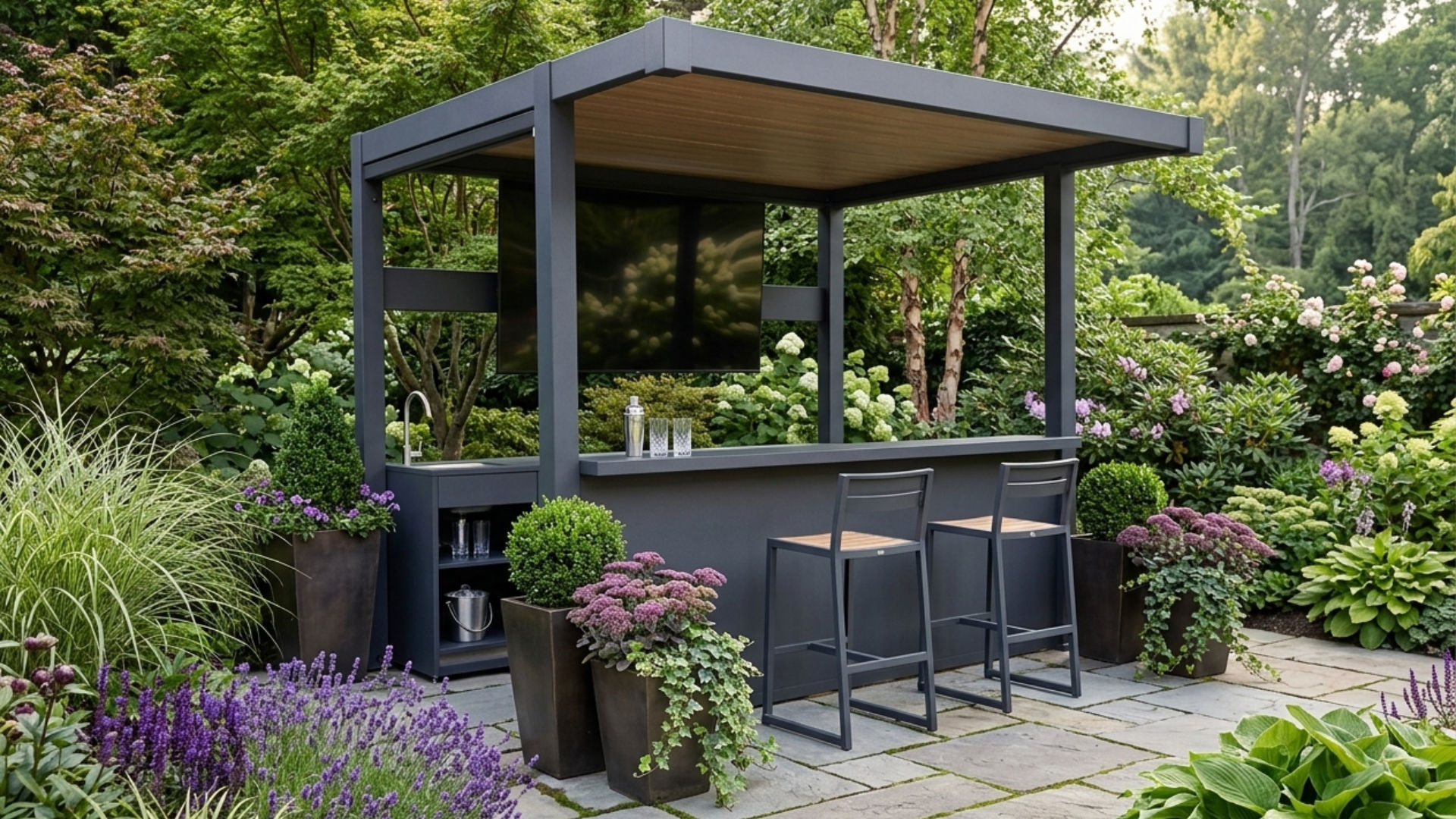
The Lumina Aluminium Pergola Kitchen is a freestanding pergola, so it gives you a standalone outdoor room you can place anywhere and furnish as a bar and kitchen, which a veranda tied to the house or a fold-away awning cannot.
Common questions
What is the difference between a pergola, veranda and awning?
A pergola is a standalone framed structure, a veranda is a roofed area attached to the house, and an awning is a retractable fabric cover that folds away. They differ in permanence, shelter and where they sit.
Is a pergola better than an awning?
For a permanent outdoor room, yes. A pergola is a full structure you can furnish and use, while an awning gives flexible shade only. An awning wins if you just want cover you can put away.
Which gives the most shelter?
A pergola with a solid roof or a veranda give the most substantial, permanent shelter. An awning offers overhead shade only, and just when it is rolled out.
Can you have a pergola instead of a veranda?
Yes. A pergola fixed against the house can cover a similar spot to a veranda, and a freestanding one gives you an outdoor room away from the house that a veranda cannot.
Which is best for UK weather?
A permanent structure with a solid roof, a pergola or veranda, copes best with UK rain and wind. An awning is better suited to sun shade and should be retracted in strong wind.
A standalone outdoor room
The Pergula Lumina is a freestanding pergola with an aluminium frame, wood-effect steel roof and a built-in bar, ready to ship from UK stock.
