Pergola Kitchen Suites for Modern Outdoor Living
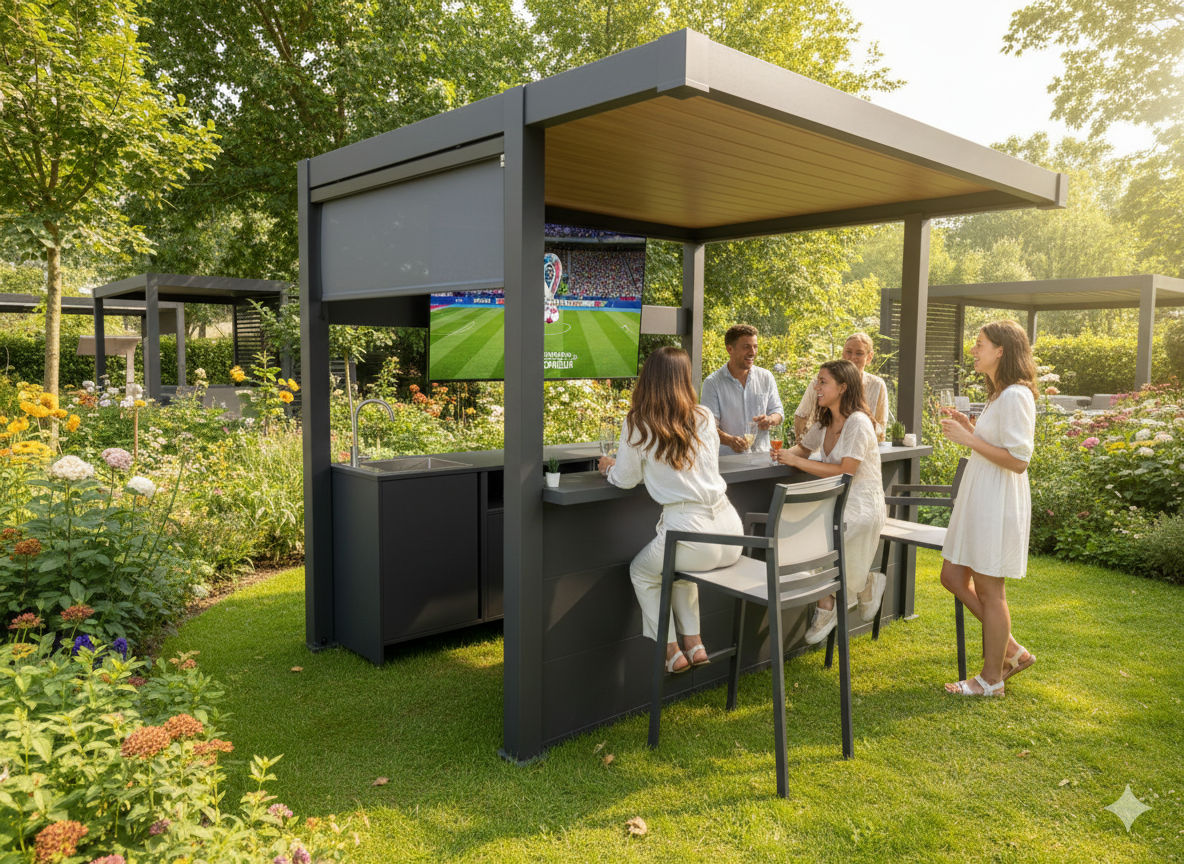
Pergola kitchen suites combine architectural shelter with practical outdoor cooking and hosting space. Designed for contemporary gardens, aluminium pergola kitchens create a defined social zone with integrated bar and preparation areas beneath a structured roof system.
What Is a Pergola Kitchen Suite?
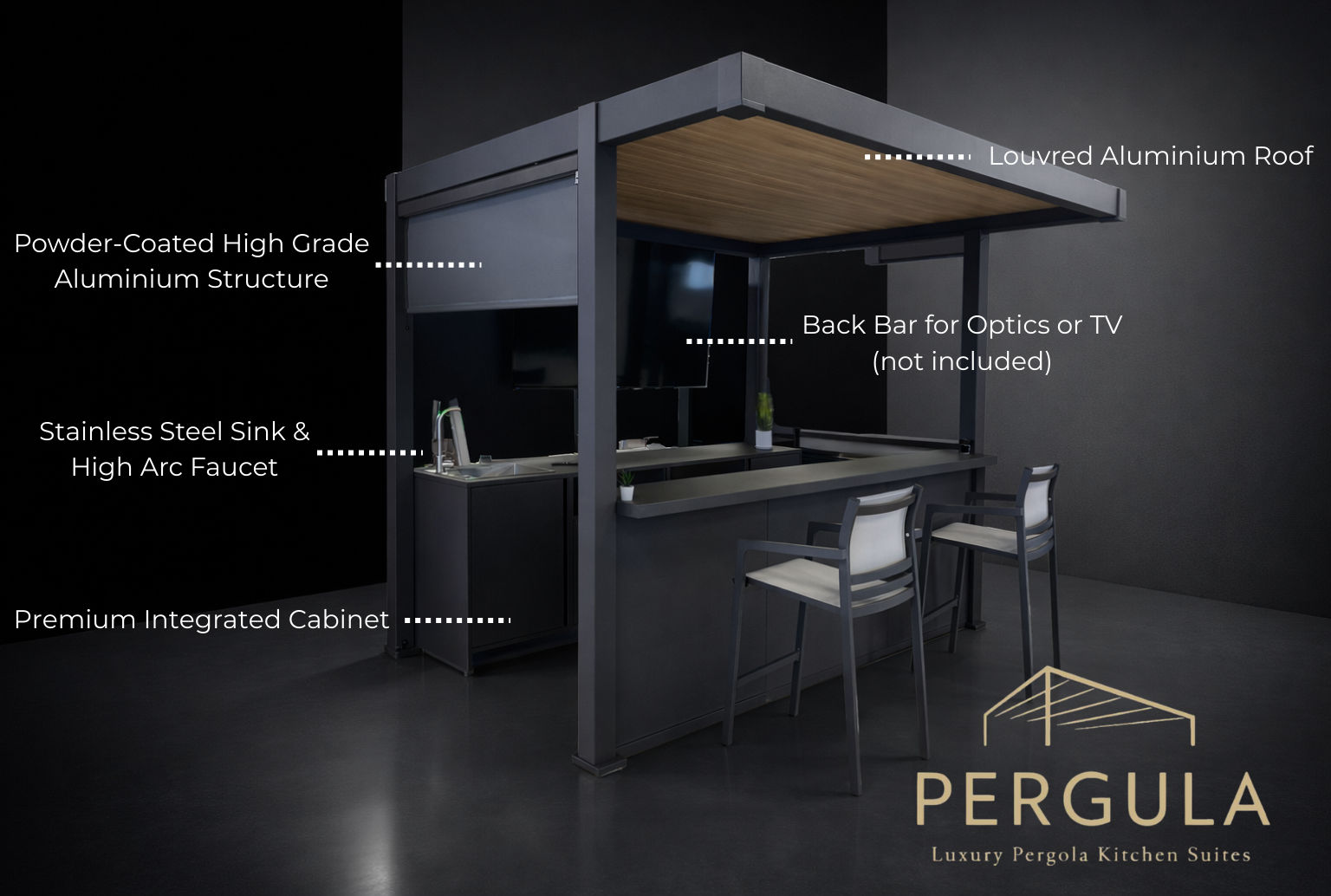
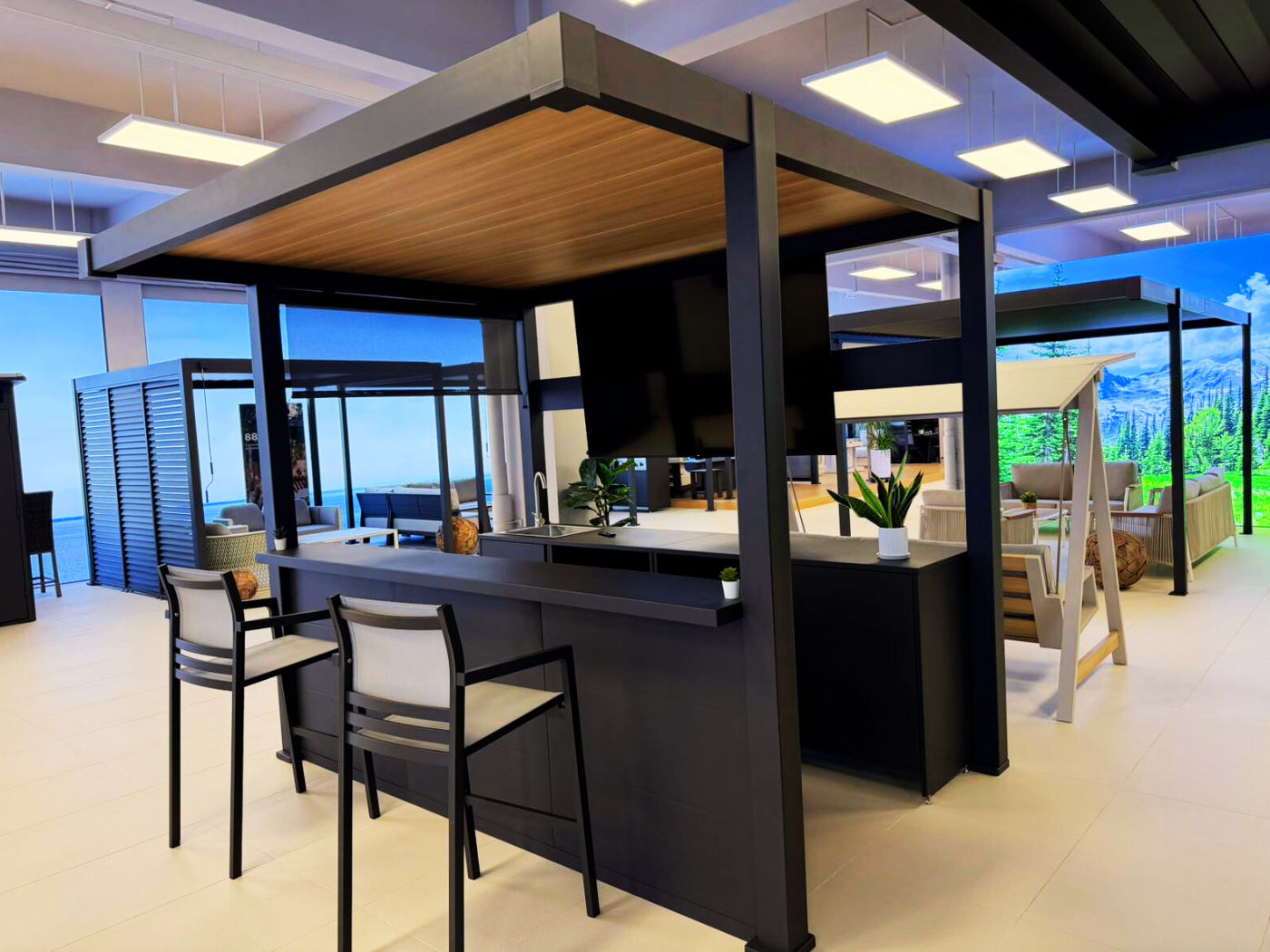
A pergola kitchen suite is a combined outdoor structure and preparation space designed to function as a single, cohesive installation. Unlike standalone bar units or freestanding pergolas, a kitchen suite integrates shelter and utility.
Typically, this includes:
- An aluminium pergola frame
- Adjustable or fixed roof system
- Built-in cabinet storage
- Sink and preparation surface
- Social bar counter or serving area
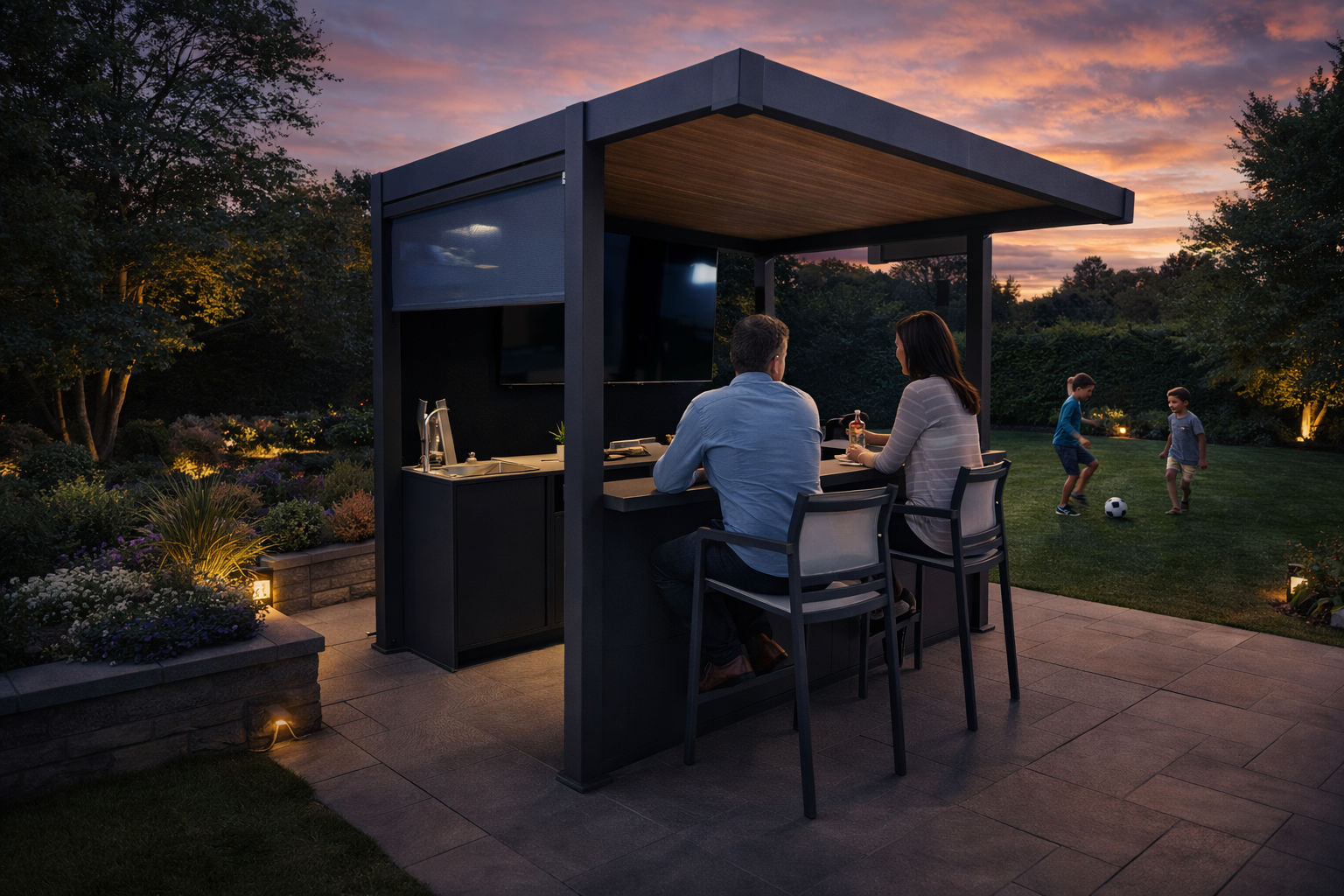
The result is a defined outdoor living zone that feels permanent and architectural rather than temporary.
Who Are Pergola Kitchen Suites Designed For?
Pergola kitchens suit a wide range of outdoor settings.
They are particularly popular with:
- Homeowners upgrading new-build gardens
- Renovation projects seeking a defined social hub
- Entertaining-focused households
- Properties with poolside or patio areas
- Holiday let and Airbnb hosts creating premium outdoor features
Because the structure and kitchen are integrated, the space feels cohesive and purpose-built.
Why Choose an Aluminium Pergola Kitchen?
Material choice directly affects how an outdoor structure performs over time.
Aluminium is widely used in architectural applications because it offers structural strength without excessive bulk. In a pergola kitchen setting, that balance matters. The frame must be rigid enough to support the roof system and integrated features, while remaining visually clean and proportionate within a garden environment.
Unlike timber, aluminium does not absorb moisture. It will not swell, split or warp through seasonal changes. In climates where rain, frost and heat all occur within the same year, that stability becomes a practical advantage. The structure retains its alignment and finish without the need for ongoing treatment.
Powder-coated aluminium further improves durability. The coating forms a protective layer that resists corrosion and surface degradation, helping the finish remain consistent even under prolonged UV exposure. This reduces the need for repainting or refinishing over time.
From a design perspective, aluminium also lends itself to contemporary landscaping. Clean lines, sharp edges and uniform colour finishes sit comfortably alongside porcelain paving, composite decking and modern garden lighting schemes.
For homeowners looking for a long-term outdoor feature rather than a seasonal addition, aluminium offers a balance of structural integrity, minimal upkeep and modern aesthetic consistency.
Pergola Kitchen vs Traditional Outdoor Kitchen
Many outdoor kitchens are designed as open countertop installations against a wall or fence. While functional, they do not define space in the same way.
A pergola kitchen suite:
- Creates shelter and structure
- Defines a dedicated entertaining zone
- Introduces vertical design interest
- Provides shade and light control
- Adds a focal point to patio areas
By integrating overhead structure with preparation space, the garden gains a clear centrepiece rather than a standalone utility area.
Planning a Pergola Kitchen Installation
A pergola kitchen suite is a substantial outdoor installation, so planning the practical details in advance makes a noticeable difference to how smoothly the process runs.
The first consideration is footprint and layout. A 2.5m x 3m structure needs clear space not only for the pergola itself, but also for circulation around it. Positioning the suite so that doors, garden paths and seating areas remain accessible ensures the structure feels integrated rather than imposed onto the space.
Access for delivery is equally important. The suite arrives as two palleted boxes, so measuring gate widths, side passages and access routes in advance avoids complications on delivery day. Confirming these details early prevents delays and unnecessary handling.
Ground preparation underpins long-term stability. A pergola kitchen suite should sit on a level, load-bearing base such as concrete or reinforced paving. An uneven or unstable surface can affect frame alignment and roof operation over time. Ensuring the base is properly prepared protects both structural integrity and finish.
If the suite includes a sink or requires power for lighting or appliances, proximity to water supply and electrical connections should be assessed during planning rather than after installation. Factoring in these services early avoids disruptive retrofitting.
Taking the time to review these elements before purchase ensures the installation proceeds efficiently and that the finished structure sits correctly within the overall garden design.
Maintenance and Longevity
When investing in a pergola kitchen suite, long-term durability is a practical consideration. Aluminium structures are widely used in outdoor applications because they offer structural strength without the moisture absorption issues associated with timber.
Unlike untreated wood, aluminium does not warp, rot or swell during prolonged exposure to rain. Powder-coated finishes further protect the surface from corrosion and colour fade, even in coastal or high-moisture environments.
In day-to-day use, maintenance is straightforward. Occasional cleaning with mild soapy water helps remove dirt and airborne residue. Fixings and roof components should be inspected periodically to ensure continued smooth operation, particularly after winter months.
For louvred roof systems, keeping drainage channels clear allows rainwater to flow correctly through the integrated guttering. This simple check helps maintain performance during heavier rainfall.
With appropriate installation and routine inspection, an aluminium pergola kitchen suite is designed to perform consistently for many years in UK weather conditions.
Frequently Asked Questions
Do pergola kitchen suites require planning permission in the UK?
Can a pergola kitchen be used in all weather?
How long does an aluminium pergola kitchen last?
Does the pergola roof leak in heavy rain?
What base is required for installation?
Can the pergola kitchen be connected to mains water and electricity?

