How to Light a Pergola
The right lighting turns a pergola from a daytime shelter into a space you use well into the evening. A mix of overhead, task and accent lighting does the job, and with a solid roof overhead you have plenty to fix to. This guide covers the options and how to plan them.
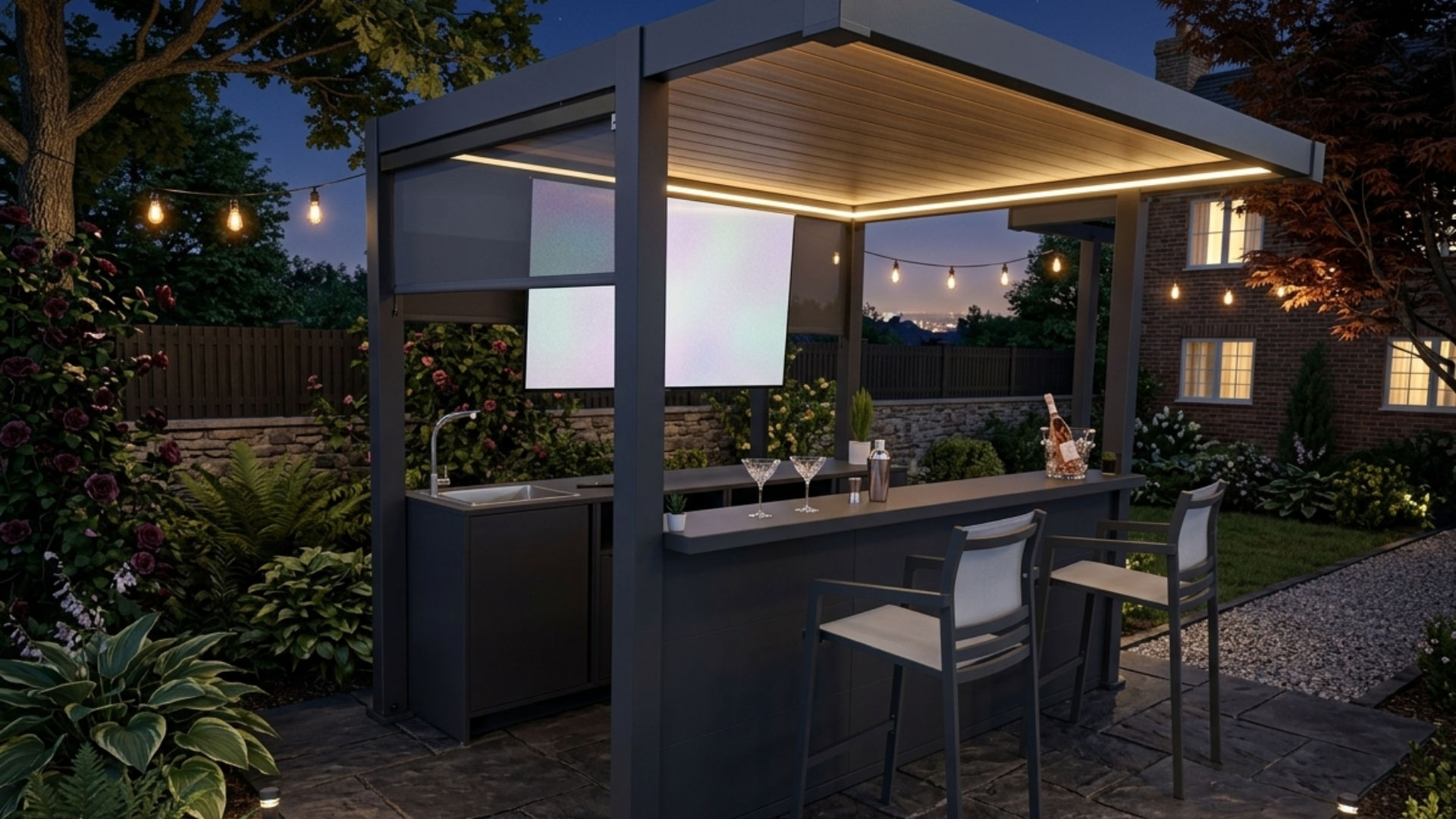
The short answer
Light a pergola in three layers: ambient light to set the mood, task light where you prep and serve, and accent light to pick out plants and paths. Use outdoor-rated fittings, keep any mains work to an electrician, and a solid roof gives you an easy place to mount fittings and hide the wiring. Get the layers right and the space works from dusk onwards.


The three layers of light
Ambient
The base layer that sets the mood: festoon or string lights along the frame, or a warm strip tucked under the roof.
Task
Brighter, focused light where you work: over the bar, the sink and the prep area, so you can see what you are doing.
Accent
The finishing touch: uplighting on plants, plus path and step lights to guide people safely and add depth.
Planning your pergola lighting
Ambient lighting
Start here. Festoon or string lights run along the frame give that instant evening feel, and a warm LED strip tucked under the roof line washes the space with soft light. This layer does most of the work for atmosphere, so get it in first and build from there.
Task lighting
Anywhere you prepare food or pour drinks needs proper light. Aim brighter, focused fittings over the bar counter, the sink and the prep area. Downlights or a discreet bar-level strip keep the working surfaces usable after dark without flooding the whole space.
Accent lighting
Accent light adds depth and safety. Uplight a planter or a nearby tree, and add low-level path or step lights so people can move around safely. Keep it subtle: a few well-placed fittings do more than a lot of bright ones.
Power and safety
Every fitting used outside should be rated for it. Look for an IP rating around IP65 for anything exposed to the weather, and a little lower only where a fitting is well sheltered under the roof. For mains wiring, use an electrician and a proper outdoor supply rather than trailing indoor leads outside.
Warm vs cool, and dimming
Warm white, around 2700K, suits a relaxed garden bar far better than cold, blue-white light. Adding a dimmer lets you drop the level for evenings and lift it when you are cooking, so one setup covers both jobs.
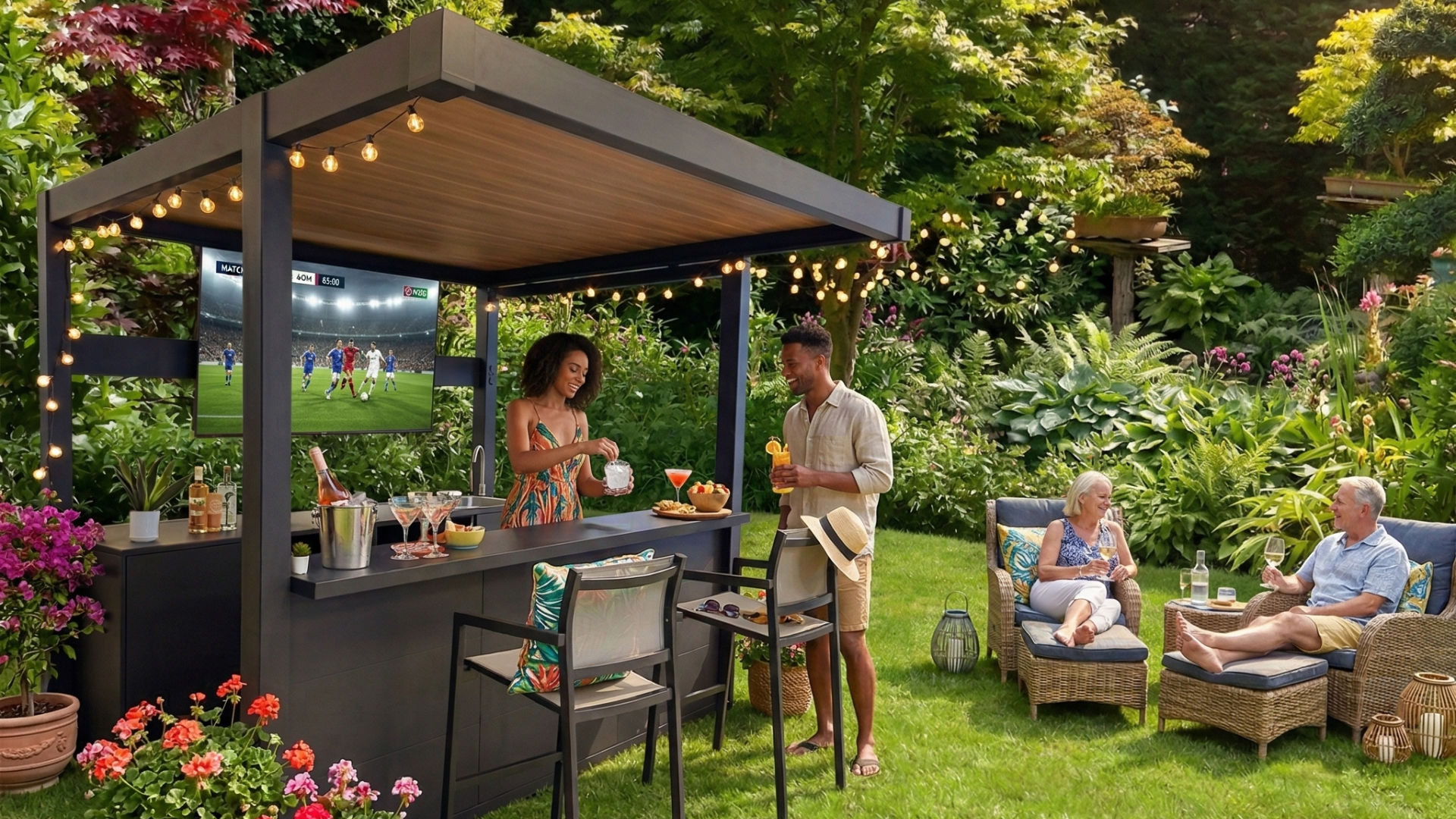
A solid roof makes all of this easier. The Lumina Aluminium Pergola Kitchen has a solid wood-effect steel roof to mount overhead fittings to and run wiring behind, plus an integrated bar that is a natural spot for task lighting.
Common questions
What lighting is best for a pergola?
A layered mix works best: ambient festoon or strip lighting for mood, task lighting over the bar and prep area, and accent lighting on plants and paths. No single type does it all.
Do pergola lights need to be waterproof?
Anything exposed to the weather should be rated for outdoor use. Fittings tucked well under a solid roof can be less heavily rated, but err on the side of a proper outdoor rating.
What IP rating do I need for outdoor lighting?
Around IP65 is a safe choice for exposed fittings. A lower rating can be fine only where a fitting is genuinely sheltered. If in doubt, go higher.
Can you put mains lighting on a pergola?
Yes, but have an electrician install a proper outdoor supply and run the cabling safely. Do not rely on indoor extension leads trailed outside.
Should pergola lights be warm or cool white?
Warm white, around 2700K, suits a relaxed garden space far better than cold white. A dimmer lets you lift the level for cooking and drop it for evenings.
A pergola built for evenings
The Pergula Lumina pairs a solid wood-effect steel roof with an aluminium frame and an integrated bar, giving you an easy base for lighting and a space made for entertaining after dark.
